


Aviation torque tools are a necessity for aircraft assembly and maintenance. Used by aircraft engineers to tighten aircraft fastener torque to precise tensions, torque tools for aviation play a crucial role in ensuring that every aircraft leaving the ground reaches its destination safely.

What Are Aviation Torque Tools?
Aircraft torque tools are torque tools that help aviation mechanics to meet the strict compliance standards required for aviation applications. They include tools such as aircraft torque wrenches (both manual and digital models), torque screwdrivers, multipliers, and other types of aerospace torque equipment that we’ll introduce in this guide.
The difference between aviation torque tools and standard torque tools comes down to quality and calibration. Because of the key role they play in aircraft safety, torque tools for aviation must be able to deliver torque to degrees of precision that guarantee no margin for error. Torque tool calibration in aviation is essential in ensuring this high-precision accuracy is met, and regular recalibration of aircraft torque tools is required to ensure these exacting standards don’t slip.
Types of Aviation Torque Tools
Aerospace torque equipment generally refers to MRO torque tools that comply with aviation tool calibration throughout an aircraft’s maintenance cycle. This definition includes the following types of tools:
Click-type Torque Wrenches

Click wrenches belong to the socket torque wrench family. The clue to how these wrenches work is in their name. Click wrenches emit an audible click sound to alert you when the required torque accuracy for aircraft has been achieved.
Once the mechanic hears this click, they can be satisfied that the nut or bolt has been tightened to the necessary tension.
Torque Screwdrivers

Torque screwdrivers make it possible for aircraft mechanics to tighten different screw types to exact levels of tension, tight enough to withstand the vibration of an aircraft in motion.
Just as with torque wrenches, torque screwdrivers play an important role in reducing the risk of stripping threads on a fastener.
Torque Analysers

Torque analysers are vital for checking the accuracy of torque tools. They ensure fasteners are neither over-tightened nor left too loose, both of which can compromise safety.
These devices work with various tools, like torque wrenches and screwdrivers. Many have digital displays for quick readings. Some also store data, helping with compliance and audits. Torque analysers are an essential addition to any aviation toolkit.
Torque Sensors

Torque sensors measure the amount of force used when tightening fasteners. They provide instant feedback, helping you apply the right amount of pressure.
These tools are easy to use and work for a variety of tasks. They make sure parts are secured properly, improving safety and reliability. With torque sensors, you can work confidently and meet safety requirements.
Why Precision Matters in Aircraft Maintenance
From the moment an aircraft begins thundering down the runway towards take-off, every part of its infrastructure is being subjected to intense pressure. Surviving its journey safely relies on every nut, bolt, and screw in the aircraft holding its position, which is why the ability to control torque to pinpoint accuracy is so vital in aircraft engineering.
History has shown us that just one bolt coming loose in flight could damage the structural integrity of the aircraft, putting the wellbeing of those travelling inside at serious risk. Aviation torque tools allow mechanics and aircraft engineers to mitigate this risk by ensuring the correct amount of torque is applied to each component, preventing over- or under-fastening.
1. Safety
Correct torque ensures that all internal and external components on an aircraft are securely fastened, reducing the risk of a fastener becoming loose during the flight.
2. Structural Integrity
Precise torque safeguards the aircraft’s structural integrity under extreme stress conditions such as take-off, landing, and atmospheric pressure changes.
3. Compliance
Using calibrated torque tools helps airlines to meet strict aviation safety regulations concerning torque accuracy for aircrafts, eliminating the risk of human error.
Best Practices for Using Aircraft Torque Tools
When using aviation torque tools, engineers must refer to the manufacturers’ guidelines in relation to the maximum load of the fastener to avoid causing a stress fracture to the component or to the aircraft’s body. Similarly, it’s important to always use the correct torque tool for the fastener type you’re handling to avoid damaging the component.
Other best practice advice for maintaining and using aviation torque tools includes:
1.Undergoing torque tool training
As torque tools rely on user capability, anyone handling torque tools for aviation should be properly trained in their use as a first line of defence against preventable accidents.
2.Keeping a clean work area
A misplaced tool or fastener can cause catastrophic damage to an aircraft in flight. Keeping a controlled and tidy workspace will ensure you never misplace a component on the job.
3.Regularly recalibrating torque tools
Over time, torque tools can deviate from their correct settings. In line with aviation safety, all torque tools should be routinely recalibrated to guarantee the integrity of their readings.
4.Visually inspecting tools before use
As many torque tools are unlockable, it’s easy for their settings to be accidentally changed. Before using any torque tool, double check that it hasn’t fallen out of adjustment.
5.Store your tools in custom foam inserts
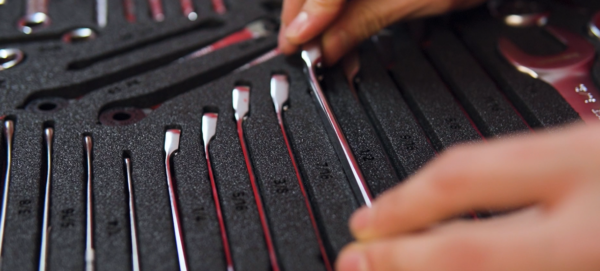
Torque tools can easily sustain damage if not properly protected. To reduce this risk, store tools in custom foam inserts, which will keep them secure and protected from impact shocks.
Benefits of Investing in Quality Aviation Torque Tools
Investing in high-quality aviation torque tools for your fasteners offers airlines and aviation mechanics reputation, productivity, and safety benefits, including:
Correct torque ensures that all internal and external components on an aircraft are securely fastened, reducing the risk of a fastener becoming loose during the flight.
1. Enhanced Safety
Being able to precisely control torque to within the recommended manufacturers’ guidelines reduces the risk of a component-related safety incident.
2. Improved Efficiency
With precision accuracy on your side, you’ll be able to assemble and maintain aircraft more efficiently, positively improving your engineers’ output.
3. Quality Assurance
The consistency afforded by using aviation torque tools ensures uniform quality is maintained across all aircraft fasteners.
4. Compliance
Many digital and electronic torque tools allow you to capture and store torque data, giving you an excellent record for compliance and auditing purposes.
Why Choose Red Box Tools for Your Aviation Torque Tools
As a tool brand that’s already trusted by some of the biggest names in commercial aviation, Red Box Tools are the natural supplier if you’re looking to invest in aviation appropriate torque tools.
With both manual and digital torque tools from brands including Mountz, you’re guaranteed to find everything you need to maintain aircrafts to the highest aviation standards with us – whether it’s a replacement for a lost or damaged tool or a complete aviation tool kit.
We additionally offer a custom foam insert and tool etching service, giving you the benefit of being able to maintain your torque tools in pristine condition throughout their lifetime.
To view our full range of torque tools for aviation, all of which include fast UK-wide delivery, just click here.
FAQs about Foam Inserts for Tool Boxes
- What are the most commonly used torque tools in aviation?
The most common torque tools used in aviation include digital torque wrenches, manual torque wrenches, beam torque wrenches, click torque wrenches, torque screwdrivers, and torque multipliers.
- How often should aviation torque tools be calibrated?
We recommend calibrating your torque tools every 5000 cycles or once a year – depending on which milestone you reach first.
- Can I use regular torque tools for aircraft maintenance?
No, regular torque tools aren’t compliant for aircraft maintenance. Anyone involved in aircraft mechanics, assembly, maintenance, or servicing should invest in high-quality torque tools designed for aviation applications.
- What factors should I consider when choosing torque tools for aircraft maintenance?
When purchasing torque tools for aircraft maintenance you should consider the quality and precision of the tool, and whether the tool meets the safety and compliance standards governed by the aviation industry.
Ready to get organised?
Find your perfect tool storage from our professional range
From tool bags and tool chests to tool boxes with wheels, tool belts, tool cases, and trade-specific tool storage, at Red Box Tools we offer high-quality solutions you can count on.
Or why not take your tool storage to the next level with our made-to-order tool box foam drawer inserts and custom shadow foaming?